Proper legal preparation determines whether your family manages asset distribution privately or through a lengthy public court process. Estate planning sets legal protocols during your lifetime to manage assets, appoint representatives, and direct property transfers. In contrast, probate is the court process that settles an estate after death when assets do not transfer directly. Working with a skilled estate planning attorney in Long Beach ensures your documents are properly drafted, organized, and funded. Creating a clear legal strategy in advance protects your assets and resolves uncertainties before court involvement is required.
What Estate Planning Actually Involves
Estate planning is the proactive creation of legally binding documents to manage assets, protect minor children, and set health care instructions during your lifetime. Working with an experienced will and trust attorney in Long Beach ensures proper preparation of key documents, such as revocable living trusts, pour-over wills, durable powers of attorney, and advance healthcare directives. These documents let you appoint trusted representatives for financial and healthcare decisions if you become incapacitated or after death. Estate planning offers essential protections for homeowners, account holders, and parents, providing clear authority regardless of financial status.
A complete estate plan gives your designated representatives immediate legal authority, removing the need for temporary court orders or emergency conservatorships during unexpected medical events. Key estate planning elements include:
- Revocable Living Trusts: Private instruments that hold property during your life and transfer assets directly to named beneficiaries without court intervention.
- Pour-Over Wills: Backup documents that ensure any unassigned property transfers to your primary trust upon death.
- Advance Healthcare Directives: Legal documents that appoint a trusted agent to make medical decisions if you cannot communicate.
- Durable Powers of Attorney: Authorizations that allow a chosen individual to manage finances, pay bills, and collect income without court supervision.
- Guardianship Nominations: Legal instructions that designate trusted adults to care for minor children instead of leaving the decision to the court.
Beyond managing immediate health and financial decisions, comprehensive planning addresses long-term asset management, business succession and property distributions. Real estate owners can specify exact conditions for property management, rental income distribution or eventual sales. By organizing assets during life, individuals establish clear guidelines that eliminate administrative ambiguity, streamline operational continuity and secure long-term family stability.
Common Myths vs Facts
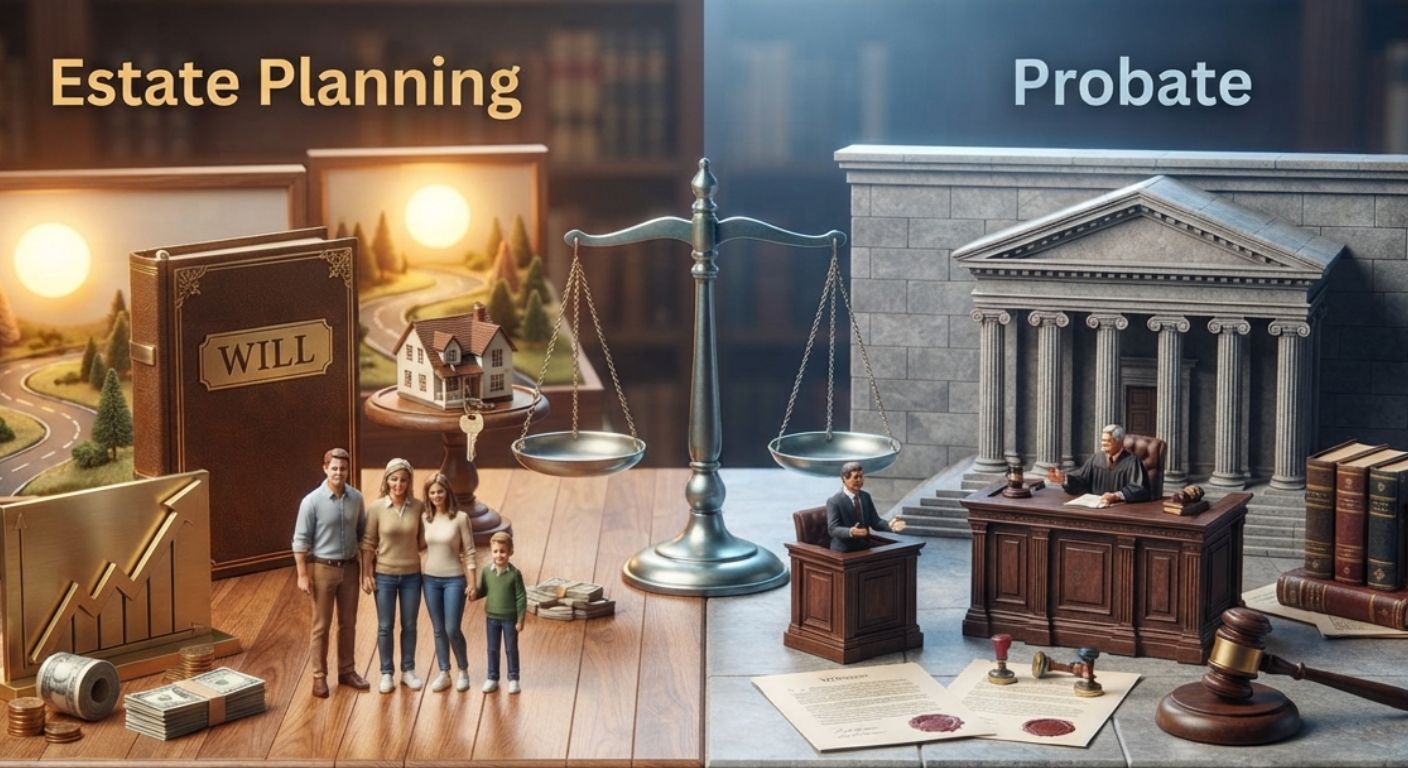
Recognizing the difference between lifetime legal preparation and post-death court administration helps families make informed financial decisions.
| Myth | Fact |
| “Estate planning and probate are the same process.” | Estate planning happens before death to control asset distribution; probate is the court process that happens after death to settle an estate. |
| “Having a will means my family avoids probate.” | A will does not avoid probate; it serves as instructions for the court, whereas a properly funded revocable living trust generally avoids judicial proceedings. |
| “Probate records are private, like a trust.” | Probate files become public court records accessible to anyone, while trust administration remains a private legal process managed outside of court. |
| “Estate planning is only for wealthy families.” | Estate planning benefits anyone owning real property, holding financial accounts or raising children by establishing immediate legal protections and guardianship directions. |
| “Once I sign my documents, my estate plan is done forever.” | Legal documents require periodic updates, typically every three to five years or following significant life events such as marriage, divorce or asset acquisition. |
Why a Will Alone Doesn’t Avoid Probate
A last will and testament is a formal instruction to the probate court, not a way to avoid court proceedings. After death, a will must be filed with the court, starting a public process where a judge validates the document, appoints a representative, and oversees asset distribution. Consulting an estate planning attorney in Long Beach clarifies how a funded revocable living trust allows real estate and financial accounts to transfer directly to beneficiaries without court involvement. Transfers through a will are still subject to probate fees, court waiting periods, and public hearings before heirs receive legal title.
Because probate is a public process, all records filed become accessible to anyone. Court files reveal estate valuations, asset lists, creditor claims, and beneficiary information. This exposure can lead to unwanted solicitations and outside scrutiny of family finances. Probate rules also require strict timelines, including public notice to creditors, mandatory appraisals, and scheduled court hearings. These requirements often delay final distributions to family members for several months or longer.
Why Choose VZ Law
At VZ Law, we provide comprehensive estate planning, probate, and trust solutions tailored to protect your family:
- Certified Legal Expertise: Our team includes State Bar of California Certified Specialists in Estate Planning, Trust, and Probate Law, with over twenty years of experience guiding clients through complex asset protection strategies.
- Total Document Solutions: From our Long Beach, CA, office, we assist with custom wills, revocable living trusts, durable powers of attorney, and healthcare directives to ensure complete security.
- Tailored Plan Selection: We work with your family to evaluate the differences between will-based and trust-based strategies, helping you choose the protection that best fits your needs.
- Local Judicial Knowledge: Our familiarity with Southern California court operations, filing protocols, and property transfer procedures ensures every legal instrument we draft functions smoothly.
- Personalized Protection: We offer direct legal guidance to protect your family’s stability, safeguard your wealth, and streamline future estate transfers.
Read More: Life Events That Should Trigger an Update
Conclusion
Estate planning is the proactive process of setting legal strategies before death to maintain control over financial assets and healthcare decisions. Probate, by contrast, is the court process required when estate documentation is incomplete. A properly structured and funded revocable living trust is the main way to preserve financial privacy and avoid court delays. Working with experienced legal counsel helps families create valid estate plans that protect loved ones and honor personal wishes.
FAQs
Does a living trust really avoid probate in California?
A properly funded revocable living trust allows assets held within the trust to transfer to named beneficiaries outside of public probate court proceedings.
How often should I update my estate plan?
Review your estate plan every three to five years, or after marriage, divorce, or major financial changes, to ensure it remains legally up to date.